
How We Bought Our First Home Without a Trust Fund or a Huge Income
When I graduated and started my first full-time job, I earned $42,000 per year.
My then-girlfriend (now my wife) worked at the same company and earned $46,000.
We did not have exceptionally high incomes - actually, it was an average, entry-level income at the time. We also did not receive a massive inheritance, nor did we have a trust fund waiting for us. Nor did we have parents cosigning for us.
But within a few years, we had purchased multiple homes. And I’m going to tell you how we did it - so you can too.
We Kept Our Housing Costs Low
At the time, I rented a room in a student house with some friends for $500 per month.
My wife rented a tiny apartment by herself for $800 per month.
Yes, this was between 2014 and 2016. Rents and wages have both changed since then. But the strategy was not simply “be lucky enough to live in 2014.”
The strategy was to keep our fixed expenses low and save the difference.
Between the two of us, our approximate monthly expenses included:
$1,300 for rent
$300 for groceries
$100 for our cellphones
$100 for gas for my truck I bought in cash at an auction (my wife walked/took public transit everywhere, I didn’t drive much other than to the grocery store and work)
$150 for insurance
Some additional money for dates and other activities
We were intentional with the rest, and we really had our eye on the prize - save money to buy our first home together. We worked, budgeted, and aggressively saved toward a down payment. After roughly a year of grinding, we had enough money to buy our first home.
And no, we did not put 20% down - let’s be real with our income; that would have taken ages. We put down a whopping 5%.
We Were Not Looking for a Dream Home
When we started looking at properties, we had something specific in mind - We wanted a reasonably priced home with an accessory apartment.
That meant we were looking for a property with features such as:
A separate entrance
A separate kitchen
Separate laundry
Separate bedrooms
Enough privacy for two households to live in the property
We were not primarily focused on finding the prettiest kitchen, the largest backyard, or the perfect neighbourhood.
We wanted a home that could help pay for itself. After searching for months, making dozens of unsuccessful offers, we found one.
It was a detached home of approximately 950 square feet. It had a two-bedroom unit upstairs and a two-bedroom apartment in the basement.
The purchase price was $350,000. Between the down payment, legal fees and closing costs, we needed approximately $25,000.
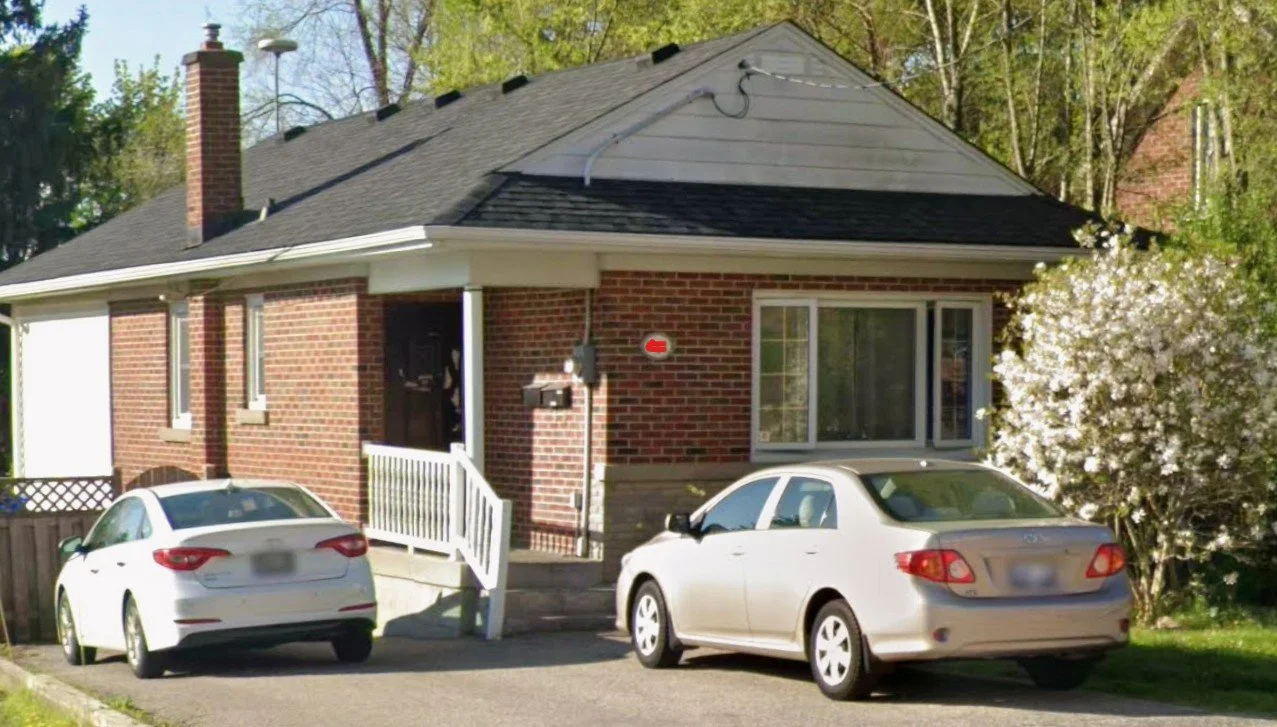
Our First home!
We Moved Into the Basement
When we received the keys, we made a decision that many buyers would not have made.
We moved into the basement. Our parents scoffed at us and friends wondered why the heck we’d do that after having worked so hard to save.
The upstairs unit was larger, brighter and more desirable. It had 2 bedrooms, 2 bathrooms, a really great kitchen and living space for entertaining (which we really wanted to do). But let’s be honest…It could also generate more rent than the basement apartment.
We could have taken the better unit for ourselves. Yes the basement was darker, way smaller, no way to entertain friends the way we wanted to. But remember, we really had our eye on something greater than the tiny apartment. We wanted to lower our monthly costs as much as possible to continue savings. And dollars and cents wise, it made way more sense to rent upstairs.
Once we had tenants living upstairs, our monthly cost of owning the house was actually lower than what we had previously been paying in rent.
We now had additional expenses, including property taxes, utilities, home insurance and maintenance. But the rental income for the beautiful upstairs unit helped offset the mortgage and made the overall numbers work.
Instead of immediately upgrading our lifestyle, we continued doing what we had already been doing - We kept our expenses relatively low, we kept saving, we continued working and looked for opportunities to earn more.
We Did Not Stop Enjoying Our Lives
During this period, I received a promotion and began earning approximately $60,000 per year.
My wife was promoted and began earning approximately $52,000.
Our incomes increased, but our lifestyle did not keep pace.
We continued living in the basement while our tenants lived upstairs. We saved the difference and paid down the mortgage.
That does not mean we never had fun.
We still went out. We still enjoyed our lives. We occasionally booked inexpensive, last-minute vacations. At the time, it was sometimes possible to find an all-inclusive trip for between $700 and $1,000 per person (crazy, I know - it was when Cuba was dirt cheap and we travelled in off-seasons that others avoided).
We were not living in complete deprivation - but we were simply clear and aligned about our priorities.
…Then We Did It Again
As our savings grew and we continued paying down our mortgage, we decided we were ready to buy another property.
By then, home prices had increased. We found a house with a beautiful upstairs unit and a basement that had significant potential. 3 beds upstairs, 1 bath, and an open-concept living room and kitchen for entertaining. Listed for 400k.
The existing basement apartment was not in good condition, but we could see what it might become. I think most people just thought of it as the dingy basement for storing your Christmas tree, but we saw what it had - a run-down kitchenette, a kinda-gross bathroom, but two bedrooms, and a separate entrance. Ding, ding ding!
We purchased the property with another 5% down payment using money we had saved. Rented upstairs for a large amount back then as it was a 3 bedroom, which helped us a lot.
Once again, we did not move into the nicest part of the house. We moved into the basement. Let’s be real - definitely a challenge downgrading from our (at least functional and tidy) basement in house #1, to a barely keeping-it-together, begging for a renovation new house.
This time, however, the basement needed to be renovated. We lived in the unit while completing the work - and, you guessed it, we rented out our previous unit at the first house. Now, home #1 was paying for itself and then some.
We used a financing option called a purchase-plus-improvements mortgage. This allowed us to arrange a mortgage based partly on the property’s expected value after the renovations were completed.
We submitted quotes for the planned improvements, used our own savings to complete the work and put in a significant amount of effort ourselves. We also received plenty of help from family (thanks guys!).
For a period, our savings became extremely tight. After spending a big chunk on the down payment, legal and CMHC tax, we still needed to dig our heels in and continue to save and spend what seemed like all our money at Home Depot. I swear, the cashiers knew me by name for those 3-4 months of renovating.
Once the renovations were finished, an appraiser visited the property to confirm that the work had been completed. The renovation funds were then released to us in a lump sum, replenishing much of the money we had used during construction.
The basement became our home in house #2, and we continued to live there and do what we always did - buckle down and save, eye on the prize.
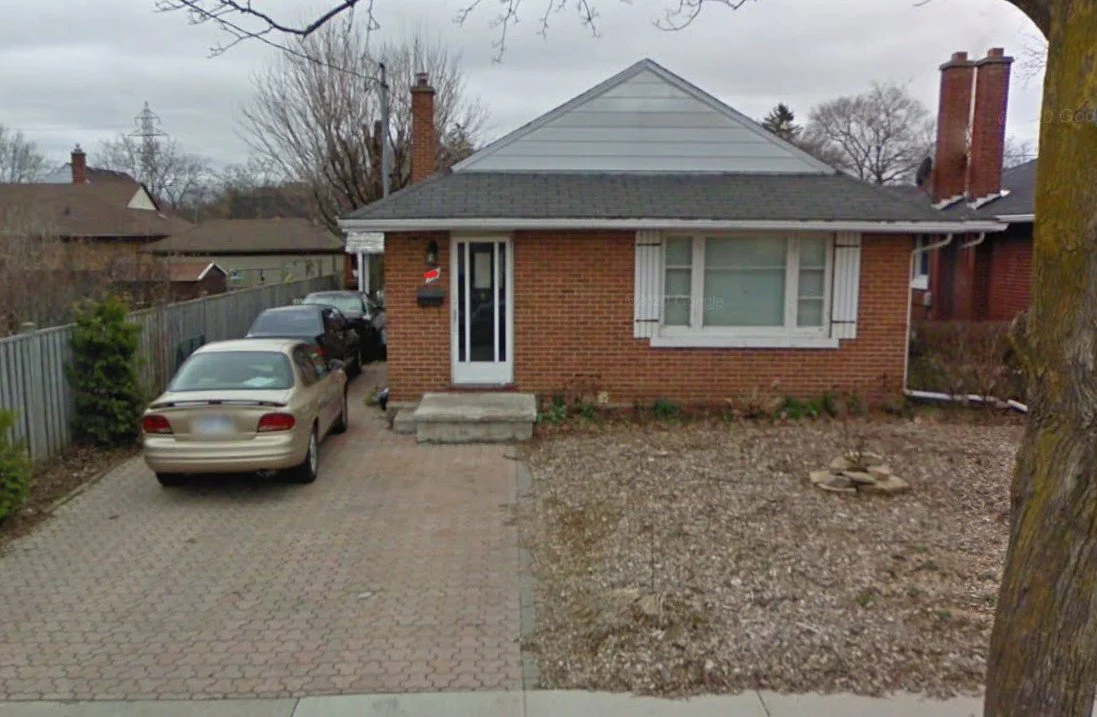
Our second home!
We Bought Two Homes in Three Years
From the time we began saving for our first down payment, it took roughly three years to:
Save for our first property
Buy a home with 5% down
Live in the less desirable unit
Rent out the better unit
Continue saving
Purchase a second home with 5% down with the purchase plus improvements mortgage
Move into that basement and rent out the upstairs
Renovate its basement
Eventually, we repeated the strategy once more with a third home before purchasing the single-family home we wanted to live in as we got married and prepared to have our first child.
The strategy was not glamorous. We spent years living in basements while our tenants lived above us. We had fridges break, washer/dryers break, dealing with all sorts of things that come up with homeownership.
But that temporary lifestyle helped us build savings, reduce our housing costs and create options for our future.
Could This Still Work Today?
Whenever I tell this story, someone says: “That might have worked back then, but it would never work today.”
Home prices have increased significantly since we bought our first property. But, that being said, rents have also increased.
That does not mean every property works. In many markets, it is harder to find a home where the rental income supports the numbers. Renovation costs, mortgage qualification rules and property values have also changed.
You have to analyze the actual property. Be critical, not just “I love this layout, and the quartz countertops”. Does it fit your goals? Can you live with this for now? Does it check the boxes for what you need to qualify for the mortgage and does it earn what it needs to cash flow (meaning after all’s said and done for property taxes, mortgage, utilities, etc are sufficiently offset (if you’re living in it), or if both units are rented, does it pay for itself?)
You need to understand the rental income, mortgage payment, taxes, insurance, maintenance costs and renovation budget (if applicable).
But the core strategy still exists; Instead of purchasing the nicest home you can qualify for, you may be able to purchase a property with an additional unit, live in part of it and rent out the rest. That rental income can reduce your monthly housing costs and help you continue saving.
It may not look exactly like our story. You might buy a duplex, a home with a legal basement apartment, or a property where you can add a unit over time. You might choose to live upstairs (no judgement, not many would want to do what we did).
The details change, but the principle does not.
Eventually, once we were married and ready to start a family, my wife threw in the towel and said it was time to buy our home to start our life with sunlight. So after 5 years of the grind, that’s exactly what we did.
The Real Lesson
The lesson is not that everyone should live in a basement and go full-frugal like us. The lesson is that buying your first home may require you to think differently about what that first home is supposed to do for you.
Your first property does not have to be your forever home, it does not have to have the perfect kitchen, it does not have to provide the lifestyle you ultimately want on day one. It can be a stepping stone.
If I was to look back at what the hardest part was in all this? The saving for the down payment for the first home. 100%. Although the renovations after working a full day was exhausting too - but the saving for the down payment on the first house took the longest, as there was nothing to subsidize your expenses.
The three biggest lessons from our experience were simple:
1) Be willing to sacrifice in the short term
We gave up space, natural light and some privacy. In return, we lowered our monthly housing costs and accelerated our ability to save. The sacrifice was temporary, but the benefits continued long after we moved out of those basements.
2) Keep the long-term goal in mind
We knew what we were trying to accomplish; living in the basement was not the goal. Building financial stability and eventually owning the home we wanted was the goal. Short-term sacrifices are much easier to accept mentally when they are connected to a clear long-term plan.
3) You do not necessarily need a trust fund
A large gift from family can absolutely help someone enter the housing market faster, but you don’t need it. It is not the only path.
We started with ordinary salaries, kept our expenses low, saved aggressively and bought properties that generated rental income.
That approach required patience, compromise and a willingness to live differently than some of the people around us.
It was not easy, but it worked.
And for the right buyer, with the right property and a carefully reviewed budget, a similar strategy can still work today.

Final Thoughts
You don’t need to go full cheapskate like we did, but sometimes it’s a good idea to think of homeownership a little differently than what your parents did. Once you lock in on what is important to you - scaling up to homeownership for your dream home sometimes requires some creative thinking to figure out how to do that, other than just saving forever. With rentals come headaches - but worthwhile to get to where you need to go and learn about becoming a real estate investor along the way.
Hope this gives you something to think about - and if you’re wondering how this journey would look like for you in this day and age, let’s make a plan.
Jeff Dinsmore
Mortgage Broker
TMG - The Mortgage Group
FSRA # 10315
VeloMortgage.ca